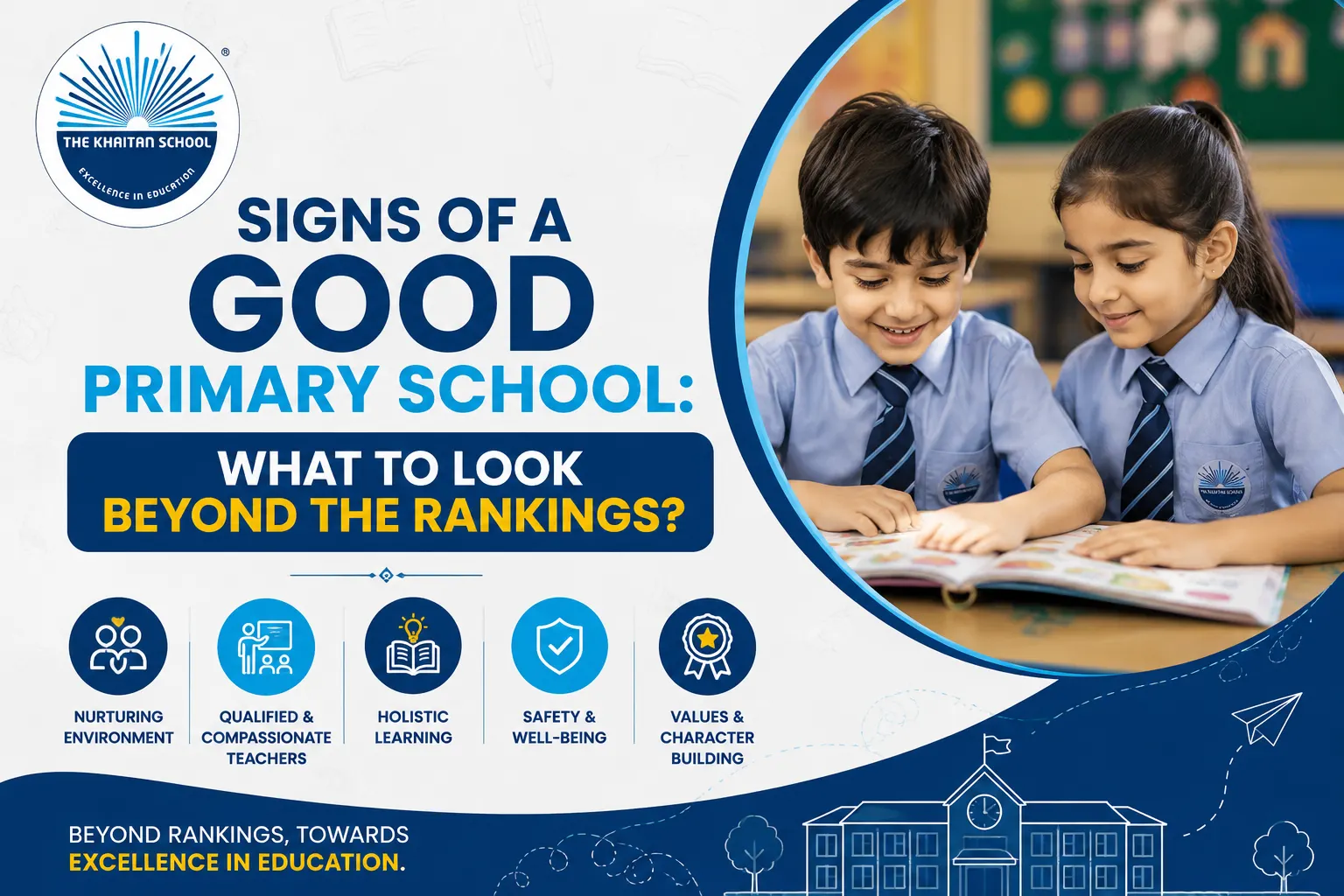
Good parenting doesn’t end with making your kids learn new things, but it is also about choosing the best primary school for your child. After home, school is the next place where children spend most of their time. Their primary learning, be it academic learning, cognitive skills or personality development, all starts at school. That is why parents look for a good primary school that helps their child build confidence, curiosity, values, and essential life skills beyond classroom learning.
It is easy to find the best schools for primary education based on ranking. But the question is whether these rankings are provided based on only academic ranking or overall learning. Even India’s National Education Policy (NEP) 2020 also focuses on foundational learning at this stage of education. And we at The Khaitan School follow that well, ensuring that we help kids develop valuable skills and learning that stays with them in the long run.
If you are also in search of the right primary school for your child, then do consider the signs we have shared below.
Focus on Both Academics and Life Skills
A good primary school will prepare children for both examinations as well as life challenges. They not only impart theoretical learning or subject learning, but they also help kids learn teamwork, creativity, empathy, decision-making, and resilience. And all this can be done only by involving kids in classroom activities, sports, art, music, and other creative projects.
Presence of Teachers Who Keep Kids Motivated
Teaching basic academic lessons to help kids do well in the exams is what all teachers do. But when you look beyond ranking, you must choose schools where teachers work on the overall development of children. They must create a comfortable learning environment while addressing the curiosity of young minds. It will help kids learn more and take more interest in both academic and extracurricular activities.
Child-Centered Learning Environment
Creating a learning environment that focuses on each child is a must, especially when it comes to primary schools. This is the learning stage for kids, and they all may have different interests. So classrooms must include all types of learning to help children explore different activities, practical experiences, storytelling and more. Classrooms should make learning enjoyable while helping children develop problem-solving and communication skills.
Regular parent and school communication
At The Khaitan School, we have built a strong parent-school partnership by involving parents in several activities. We also keep them updated about their child’s progress, interact with them regularly, call them for occasional visits, and provide updates regarding cultural programs. This helps parents know what is better about their child and make them work on areas where the focus is required.
Safe, inclusive, and happy campus
Children learn best when they feel secure, respected, and involved. That is why parents must choose schools that maintain strong safety standards, promote inclusivity, encourage positive behaviour, and provide emotional support. Their child’s concerns or curiosity must be addressed in the right way, as that is the only way to make them participate confidently without fear of failure.
Conclusion
Parents must understand that the real measure of a school lies in how it nurtures young minds during the years when habits, values, confidence, and curiosity are taking shape. A supportive learning environment, caring teachers, balanced development, and strong school-parent collaboration are what help create experiences that influence children long after they leave the classroom. And considering the fact that NEP 2020 also promotes the same, we at The Khaitan School ensure that we work on the same module to make our school offer the best learning experience.
Frequently Asked Questions
Primary school education is the beginning for children’s learning, and it helps build foundational literacy, numeracy, social skills, and confidence that influence future academic success. That is why primary school years are important, as they help children develop overall skills along with academic skills.
Parents must ask about teaching methods, teacher qualifications, student safety, co-curricular activities, assessment practices, school environment. All these matter the most when selecting a primary school, especially when you are focusing on holistic learning rather than only academic learning. Apart from these, parents must also ask about their involvement in school activities.
Activity-based learning focuses on a practical approach rather than imparting only theoretical learning. It helps improve a child’s engagement, strengthens conceptual understanding, enhances critical thinking, and encourages them to enjoy learning instead of memorising facts.
Holistic development helps children build communication skills, creativity, emotional intelligence, confidence, and problem-solving abilities along with academic knowledge. It helps prepare them for future challenges.
Activity-based learning helps children understand concepts more easily. It also improves their participation, strengthens critical thinking, and encourages them to enjoy learning through practical experiences rather than only theoretical learning.
Parents must pay attention to the classroom & its environment, teacher-student interactions, safety measures, cleanliness, availability of learning resources, and whether children appear happy, confident, and actively involved.
Healthy student-teacher interaction encourages children to ask more questions, express their ideas freely, and build confidence from an early age. The best teachers know well how to address the curiosity of little minds to give them the right direction.
