
When looking for the right school for their child, parents have to look after several factors. And considering age criteria is one of them, especially when you are beginning with Nursery admissions. One of the major aspects that parents have to consider is age eligibility. Most parents have the same query when planning to get their child’s admission: What is the minimum age for nursery admission?
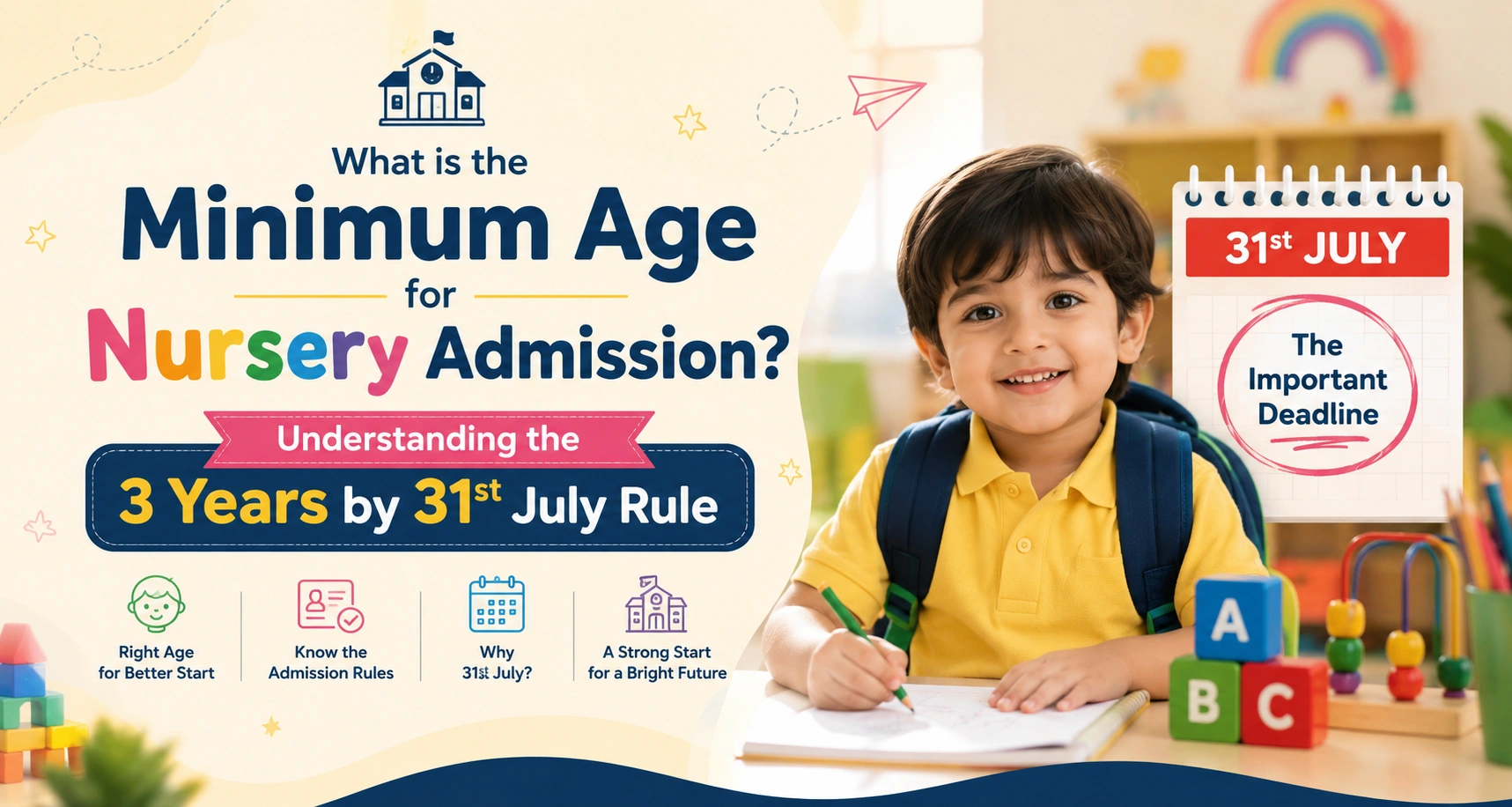
Considering the commonly followed admission guidelines, a child must be 3 years old by 31st July of the academic year to be eligible for nursery admission. This admission guideline is formed by ‘The Ministry of Education, India’ and it was instituted in 2020 under the National Education Policy (NEP). It makes it mandatory for all schools to follow this age criterion to ensure learning readiness and overall development in children. At The Khaitan School, we follow the same age-criteria to take admission in the Nursery Class.
What does “3 Years by 31st July” mean?
The rule “3 years by 31st July” simply means that a child must be three years of age on or before 31st July of the admission year. Like several other factors, date of birth also plays an important role in deciding the eligibility for school admission. This acts like a cut-off date for ensuring that children in the same class fall within a similar developmental stage.
Examples: Here are some examples to help you understand this well:
If the admission year is 2027 and the cutoff date is 31st July 2027, a child must turn three years old on or before that date to qualify for Nursery admission. And to ensure that parents are following the rules correctly, they are requested to keep the child’s birth certificate ready during the admission process.
Why is the age criterion important for nursery admission?
The nursery admission age requirement is not only an administrative rule. But it is also being designed to support a child’s readiness to adapt to the structured learning environment. Let’s know more about why the age criteria are important for nursery admission.
Communication Development – Language and communication skills grow fast during the early years. By the age of three, children are usually able to express basic needs, understand instructions, and engage in simple conversations, making them ready for elementary education.
Emotional Readiness – At around three years of age, most children begin developing the emotional maturity that helps them spend time away from parents in a classroom setting. They slowly learn independence and become more comfortable interacting with teachers and classmates.
Social Interaction Skills – Nursery classrooms encourage group activities, sharing, and teamwork. Children who meet the recommended age criteria are more prepared to participate in social interactions and build friendships.
Classroom Adaptation – Children of this age group easily and comfortably adapt to classroom routines, structured activities, and daily schedules.
Build Confidence – Starting school at the right age helps children experience success in learning activities, which builds confidence in them. It encourages a positive attitude toward education for more participation and learning.
How does age-appropriate learning benefit children?
Every child develops at their own pace, but age-appropriate learning provides the right balance of challenge and support. Here are some of its benefits:
- Children of this age are developmentally ready to engage more actively in classroom activities such as storytelling, singing, art, and other play-based learning.
- Being in a class with children of a similar age allows children to feel more comfortable and connected. This also helps build a sense of belonging and encourages participation.
- Age-appropriate learning and activities help children build meaningful friendships and develop essential social skills through everyday interactions.
- When children enter school at the right age, learning expectations are more according to their developmental abilities. This helps reduce unnecessary stress and helps them gain better learning experiences.
- Nursery education focuses on different aspects of development, including cognitive, emotional, social, physical, and language development. With age-appropriate learning, children can benefit fully from these foundational learning activities.
Common Questions Parents Have About Nursery Admission Age
Can schools relax the age criteria?
Most schools follow prescribed admission guidelines and age norms as it has been formed by the Ministry of Education. Though policies may vary slightly, but schools generally adhere to the official age requirements established by educational authorities.
What documents are required for age verification?
The birth certificate is considered as the primary document used to verify a child’s age during the admission process.
What if my child misses the cutoff by a few days?
If a child does not meet the age requirement by the cutoff date, parents may need to wait until the next admission cycle.
Is the age rule the same for all schools?
Many schools follow similar age criteria, but admission policies can vary depending on local regulations, educational boards, and institutional guidelines. Parents are advised to confirm with the school before planning to get their children’s admission in that school.
Nursery Admissions at The Khaitan School
At The Khaitan School, nursery admissions are conducted according to the prescribed admission norms and age eligibility guidelines. We believe that early childhood education should be nurturing, engaging, and developmentally appropriate. We have designed learning environment to support curiosity, creativity, communication, and confidence during a child’s initial development years. Through child-centric teaching practices and age-appropriate activities, we encourage students to explore and learn at their own pace. We have a transparent admission process which helps parents understand eligibility requirements and admission procedures with ease.
Conclusion
The minimum age requirement for nursery admission is formed for an important reason. It helps ensure that children are emotionally, socially, and developmentally ready to begin their educational journey. By understanding the 3 years by 31st July rule, parents can now easily determine eligibility and plan admissions accordingly. If you would like to learn more about nursery admissions, eligibility criteria, or the admission process of our school, The Khaitan School, connect with our admission team or visit the school website for detailed information.
